Why India’s carbon capture strategy could redefine industrial competitiveness worldwide
India’s $2.4 billion commitment to Carbon Capture, Utilisation and Storage (CCUS) is not merely a climate policy decision-it is a calculated move in the emerging geopolitics of carbon, trade, and industrial resilience.
As carbon intensity becomes a decisive factor in global market access, India is positioning itself to protect its industrial base, safeguard exports, and remain competitive in a world where carbon is fast becoming a traded liability.
For global CEOs, this investment signals a shift: climate strategy is now industrial strategy.
CCUS Moves from Environmental Option to Economic Imperative
Carbon Capture, Utilisation and Storage refer to technologies that capture carbon dioxide at emission sources-such as cement plants, steel mills, refineries, and power stations-and either store it permanently underground or convert it into usable products like fuels, chemicals, or construction materials.
India’s CCUS push targets precisely those hard-to-abate sectors that underpin global infrastructure and economic growth but cannot be fully decarbonised through renewables or electrification alone.
This is not about experimentation. It is about industrial continuity in a carbon-constrained world.
A Direct Response to Carbon-Linked Trade Barriers
The funding announcement in the Union Budget 2026–27 aligns with India’s Net Zero by 2070 pledge and builds on the National CCUS R&D Roadmap released in December 2025. That roadmap outlines an ambitious target: capturing 750 million tonnes of CO₂ annually by 2050.
The strategic driver is clear. With mechanisms like the EU’s Carbon Border Adjustment Mechanism (CBAM) already penalising carbon-intensive imports, emissions now translate directly into tariffs, margin erosion, and lost competitiveness.
CCUS offers India-and its global trading partners-a pathway to:
- Maintain export access to regulated markets
- Reduce embedded carbon in supply chains
- Avoid climate-driven trade shocks
Why India’s Move Has Global Consequences
Globally, CCUS deployment is accelerating but remains concentrated in developed economies. As of early 2026:
- Around 77 commercial CCUS facilities operate worldwide
- Roughly 64 million tonnes of CO₂ are captured annually
- Projects under development could push capacity beyond 500 Mtpa by 2030
India’s entry at scale changes the equation. Success here would demonstrate that large emerging economies can decarbonise heavy industry without deindustrialising, setting a precedent for Asia, Africa, and Latin America.
This matters because the next wave of industrial emissions growth will come from emerging markets-not the West.
Decarbonisation Without Deindustrialisation
India’s industrial growth-fuelled by steel, cement, power, and chemicals-remains essential for infrastructure, employment, and exports. CCUS provides a bridge between economic growth and climate responsibility.
By investing in:
- Shared transport and storage infrastructure
- Commercial-scale capture systems
- Public–private risk-sharing mechanisms
India is laying the foundation for scalable, cost-efficient carbon management, rather than fragmented pilot projects.
What This Means for Global Executives
For C-level leaders, India’s CCUS strategy carries clear strategic implications:
- Lower long-term carbon risk in India-linked supply chains
- Greater regulatory resilience for energy-intensive assets
- New opportunities in carbon utilisation, infrastructure, and clean-tech investment
As climate policy shifts from voluntary targets to enforceable trade rules, early adopters of CCUS will shape future cost curves and global standards.
The Strategic Debate-and India’s Position
CCUS remains debated globally. Critics argue it risks prolonging fossil fuel dependence, while institutions like the IEA and IPCC consider it indispensable for 1.5–2°C climate pathways-particularly for hard-to-abate sectors.
India’s approach makes its position clear: CCUS is not a substitute for renewables; it is a complement where alternatives are not yet viable.
If executed effectively, this $2.4 billion investment could:
- Build domestic clean-tech capabilities
- Attract global capital and partnerships
- Strengthen India’s role in low-carbon manufacturing
In doing so, India moves from climate compliance to climate-influenced economic leadership.
Executive Takeaway
In a world where carbon intensity increasingly defines market access, India’s CCUS bet is a signal to global industry: the future of trade, manufacturing, and competitiveness will be written in carbon terms.
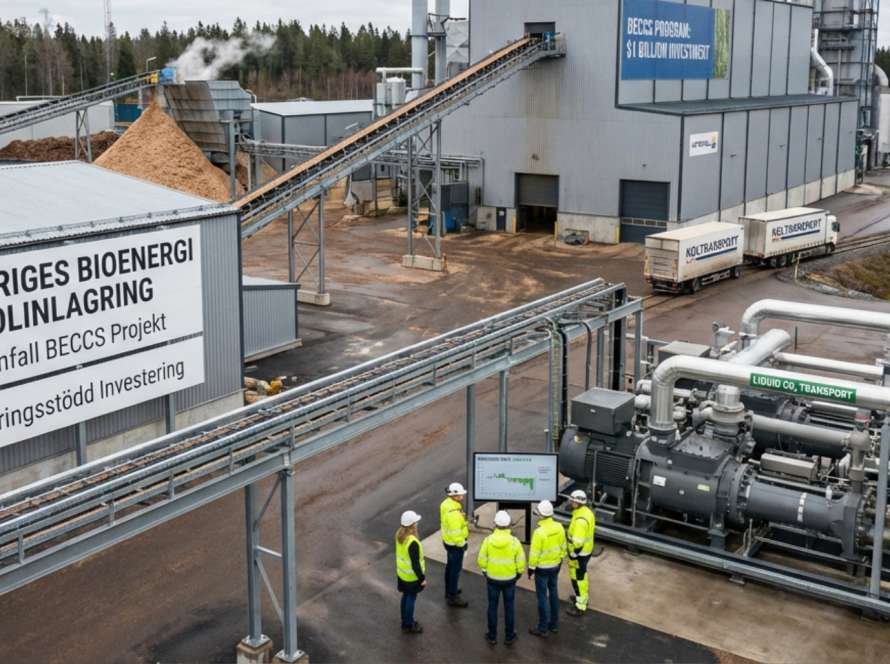
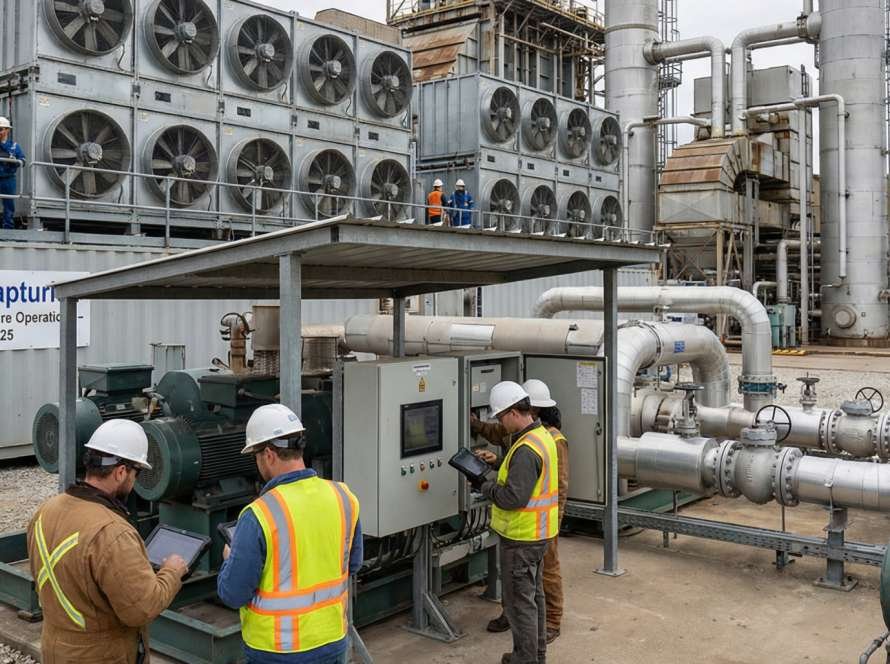
CCUS in 2026 headline graphic highlighting carbon capture’s shift from pilot projects to a scalable decarbonization solution for hard-to-abate industries pursuing net-zero targets.